Field Day Activities for Kids: 12 Wildwood Games Ideas
The best field day activities for kids aged 4–10 are short, simple events where every child gets plenty of turns: relays, a hurdle course, a ribbon dance, a beanbag toss, a gentle tug-of-war and a medal ceremony to finish. Here are twelve ideas built around the four animal teams from The Wildwood Games, with free printables to tie the day together, whether you call it field day or sports day.
In the book, every few years the Foxes, Bears, Wolves and Eagles of the Wildwoods gather to test their skills, and each team has a speciality: the Wolves love speed, the Eagles love finesse, the Foxes love agility and the Bears love strength. That makes a ready-made plan for a school, club or backyard field day.
Plan the day around four teams
Split the children into four teams and give each one an animal and a colour:
- Wolves (grey) for speed events
- Eagles (blue) for events that need a steady eye
- Foxes (orange) for agility events
- Bears (brown) for strength events
Mix ages and abilities on every team, so nobody’s team is “the little ones”. Every team plays every event; the animal just decides which events that team introduces and cheers loudest for.
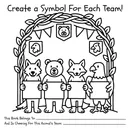
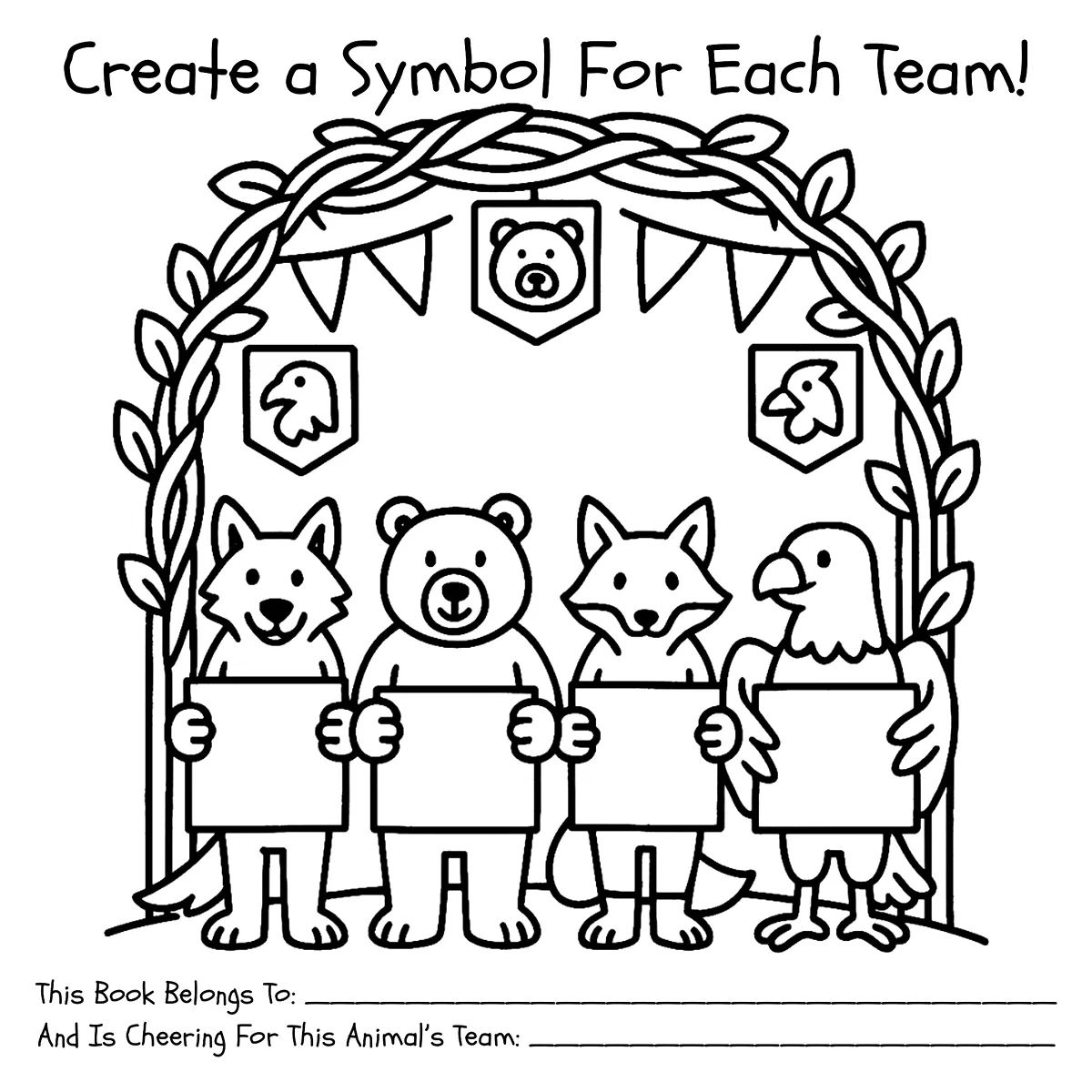
Start with team symbols. The free colouring pack includes a Create a symbol for each team page from the book. Give each team ten minutes to design its flag, then tape the finished pages to the cones at their home base. It’s a calm way to start the day while latecomers arrive.
Wolf events: speed
1. Baton relay
A classic for a reason. Decorate cardboard tubes as batons and keep the legs short: 20 to 30 metres for four- to six-year-olds, longer for older kids. Pair a younger runner with an older one for the hand-over so the little ones aren’t left chasing.
2. Standing long jump
Draw a chalk start line, let each child jump from standing, and mark the landing with a chalk dash in the team’s colour. Younger children compete with their own first jump (“can you beat your own mark?”); older ones add up the team’s best three.
Eagle events: finesse
3. Sky-ribbon dance
In the book, the Eagles twirl ribbons through the sky, and they award medals for creativity and style rather than speed. Make ribbon wands from crepe paper taped to a stick, play some music, and judge on the best spin, the biggest swirl and the most surprising move.
4. Sky-basketball hoop toss
Have an adult hold a hula hoop up high (or hang one from a branch) and give each child three beanbags or soft balls to throw through it. Lower the hoop for the youngest players.
5. Target practice
The Eagles practise archery in the book. Keep it safe and simple: paper-plate targets taped to a fence or wall, and beanbags instead of arrows. Rings drawn on the plates score one, two or three points.
Fox events: agility
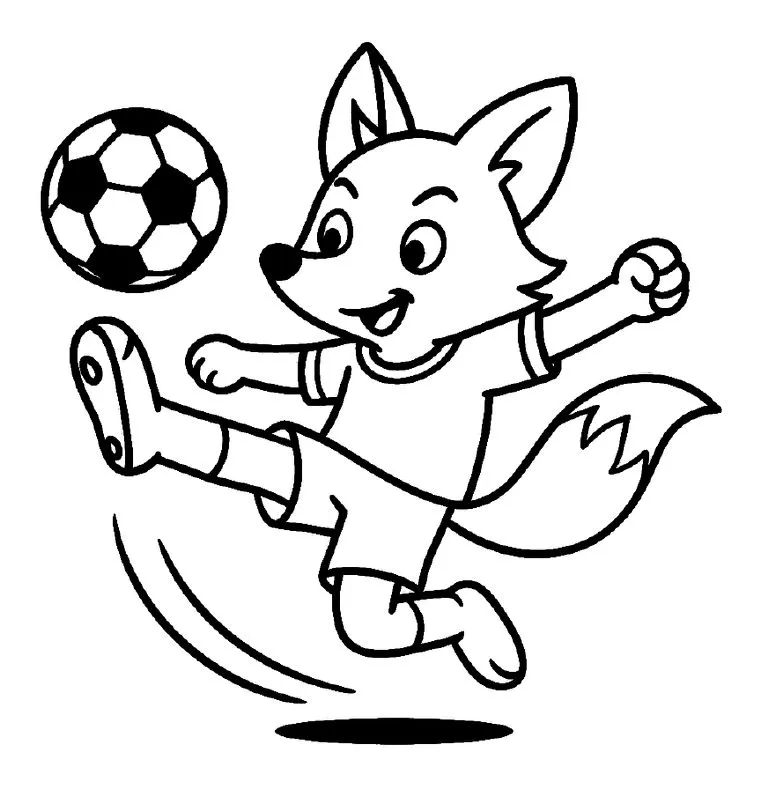
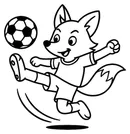
Fox soccer from The Wildwood Games. Colour this page online.
6. Soccer dribble course
Set out a zigzag of cones, have each child dribble through and then shoot at a goal made from two backpacks. Time it for older kids; for younger ones, every goal counts.
7. The steeplechase
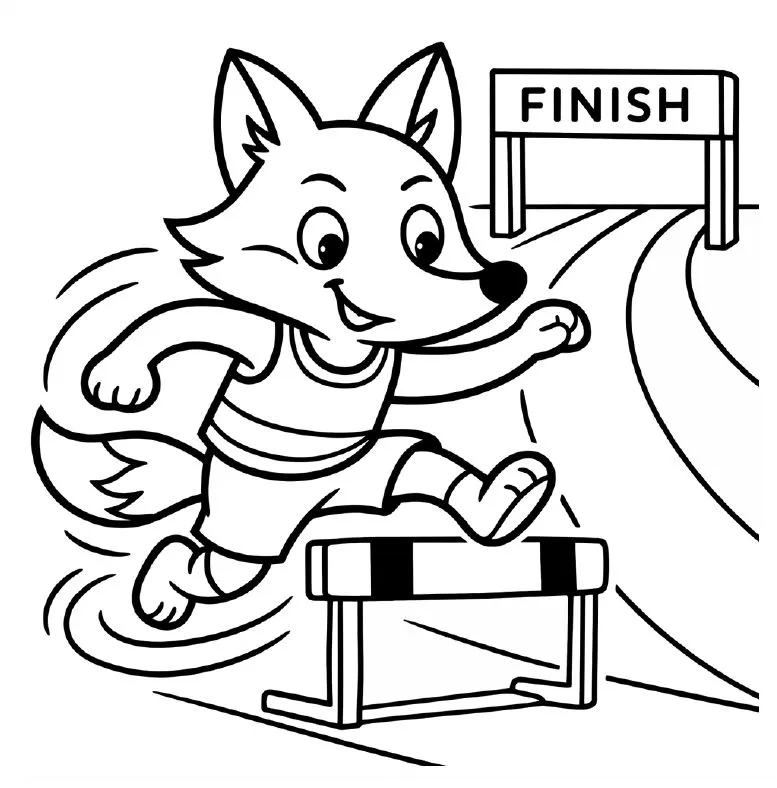
The Foxes’ favourite. Build a short obstacle course: pool-noodle hurdles balanced on cones, a hula hoop lying flat to hop into, a line of cones to weave through, and a ribbon across the finish line to break.
8. Sponge relay
The book ends its water events with a swim in the Wildwoods Lake. On a hot day, bring the lake to you: each team soaks a big sponge in a bucket of water, runs it to an empty cup or bucket, squeezes it out and runs back. The first team to fill its bucket to a line wins, and everyone cools down.
Bear events: strength, and a surprise
9. Tug-of-war
The Wolves challenge the Bears to a tug-of-war in the book. Keep it friendly and safe: use a thick rope on grass, match teams by size, never let anyone wrap the rope around a hand or wrist, and have an adult call short pulls of ten seconds or so.
10. Balance beam
The Bears surprise everyone in the book by doing well at the balance beam, an event that needs patience instead of strength. Use a chalk line, a strip of tape or a plank lying flat on the ground, and add a beanbag on the head for older children.
11. Honeycomb hunt
The Bears’ favourite event in the book is a honeycomb-eating contest. Food contests are tricky with allergies, so try a honeycomb hunt instead: cut hexagons from yellow paper, hide them around the field, and give each team five minutes to collect as many as it can. Each hexagon is a point.
The grand finale
12. Moon-lit marathon
The Wildwood Games end with a marathon by moonlight. Finish your day with one gentle lap that every child runs together, with glow sticks if it’s an evening event. Hold a ribbon across the finish line and let the whole group break it at once.
The medal ceremony
Stack three sturdy boxes (or chalk the numbers 1, 2 and 3 on the ground) for a podium, and make medals from cardboard circles and ribbon. Every child gets a medal; the categories are where the fun is. Borrow from the Eagles and give medals for things other than winning: best teamwork, loudest cheering, kindest team-mate, most creative ribbon dance.
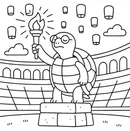
Every field day needs a referee. In the book it’s Snappy Snapsalot, the wise old snapping turtle who lights the opening torch and knows every rule. A grown-up with a whistle and a paper-plate turtle shell makes a very convincing Snappy.
Free printables for your field day
- The free colouring pack has four pages from The Wildwood Games that fit the day: the opening torch, fox soccer, the team-symbol page and a trophy. Use them for a quiet colouring station between events, or send the trophy home as a keepsake.
- The Colouring Studio has eight Wildwood pages to colour online, which makes a good back-up plan for a rainy day or a cool-down after the medals.
- The Wildwood Games itself follows every event from the opening torch to the closing fireworks, with a page of story for each picture. It makes a nice prize for the team captains.
Questions people ask
How long should a field day be for kids aged 4–10?
About an hour and a half to two and a half hours works well. Keep each station to 8–12 minutes, add a water break every half hour, and finish with a medal ceremony. Four- and five-year-olds do best with shorter stations and more breaks.
How do you keep field day fair with mixed ages?
Mix ages on every team, let younger children run shorter legs or take an extra try, and give points for effort, teamwork and cheering as well as for winning.
What equipment do you need?
Cones or plastic cups, chalk, a few soft balls, beanbags, hula hoops, pool noodles, a thick rope, buckets and sponges, plus ribbon and cardboard for medals. Most of it is probably already in a classroom cupboard or garage.
What if it rains?
Most events move indoors. Run relays down a hallway with beanbags, make a balance beam from a strip of tape, toss beanbags into a laundry basket instead of a hoop, and set up the colouring station early.